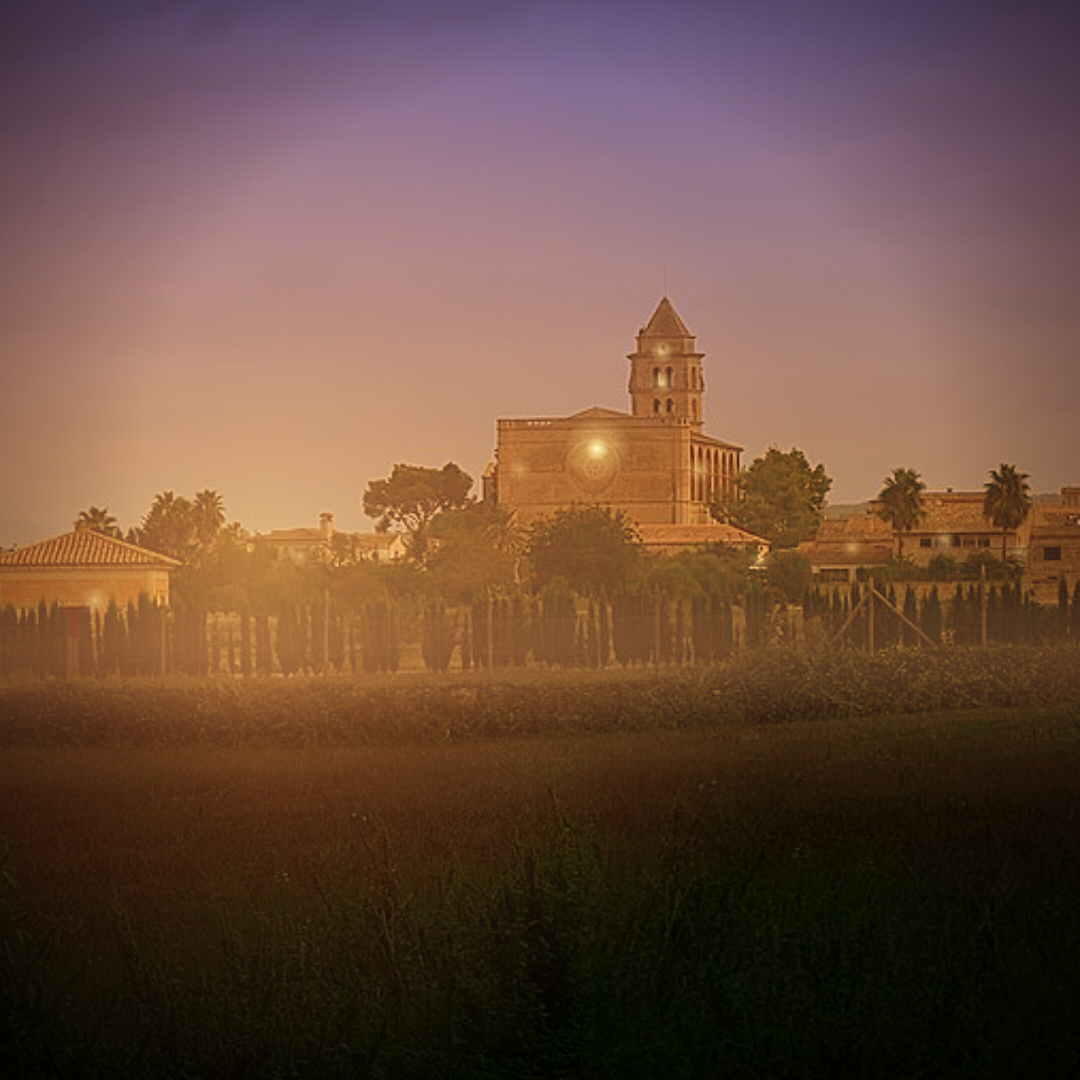
Petra, Mallorca
1713 — 1730Born 24 November 1713 to Antonio and Margarita, farmers of vineyards and wheat. So frail he was baptised the same day. He grew into a brilliant, restless child a small village could not keep.
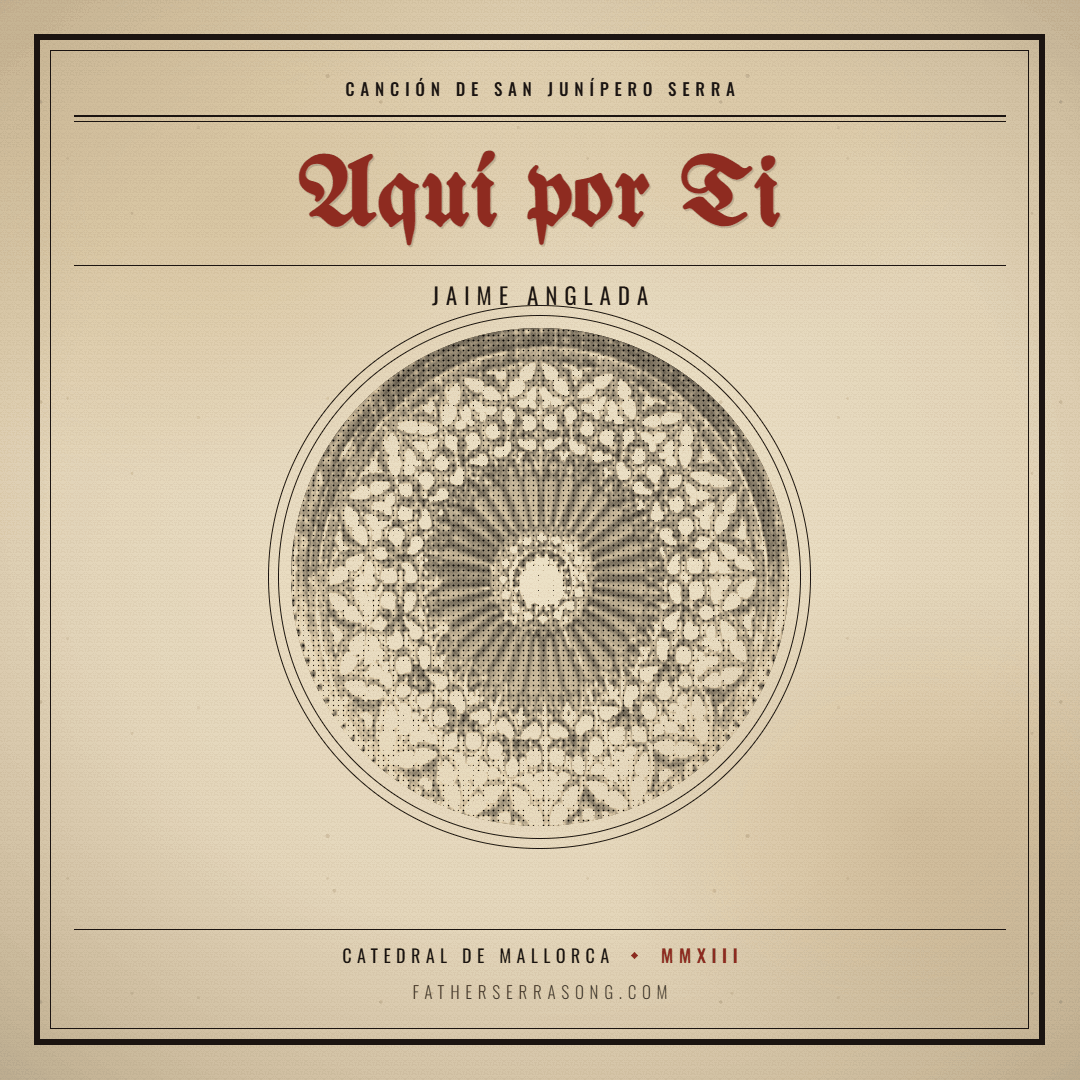
A young man from Mallorca stood at the edge of the sea and chose. Three centuries later, Jaime Anglada wrote the prayer he might have said — and sang it beneath the rose window of Palma Cathedral.
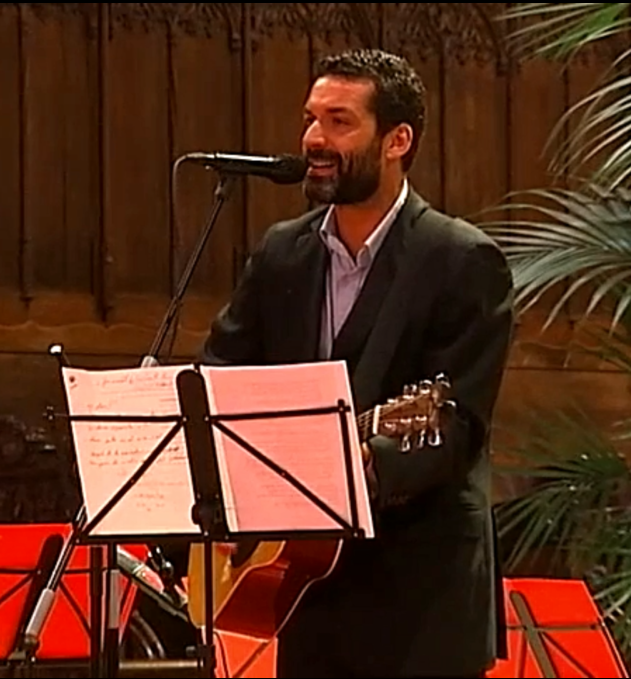 Composed & performed byJaime AngladaPalma de Mallorca · 2013
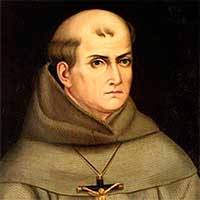 In memory ofSaint Junípero Serra1713 — 1784 · Petra → California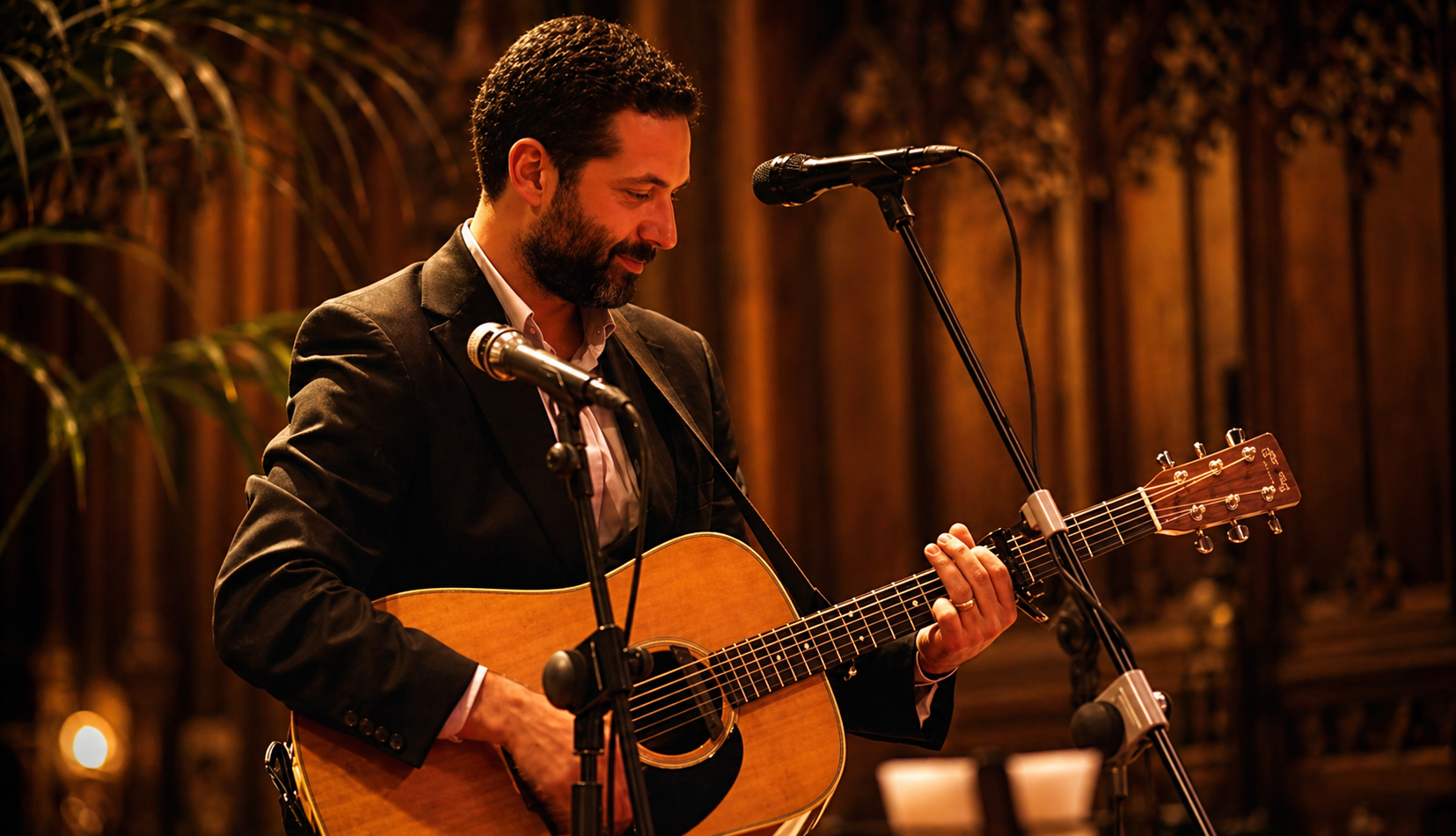
Statues show us what Serra looked like.Missions show us what Serra built.History books tell us what Serra did.‘Aquí Por Ti’ tells us what Serra felt.
It is not a hymn about a saint. It is a prayer — the one a young man might have said, alone, the night before the ocean. ¡Y rezo! And I pray.
The lyric video — every line in Spanish with its English beside it — over the recording from the night the song was first sung in La Seu.
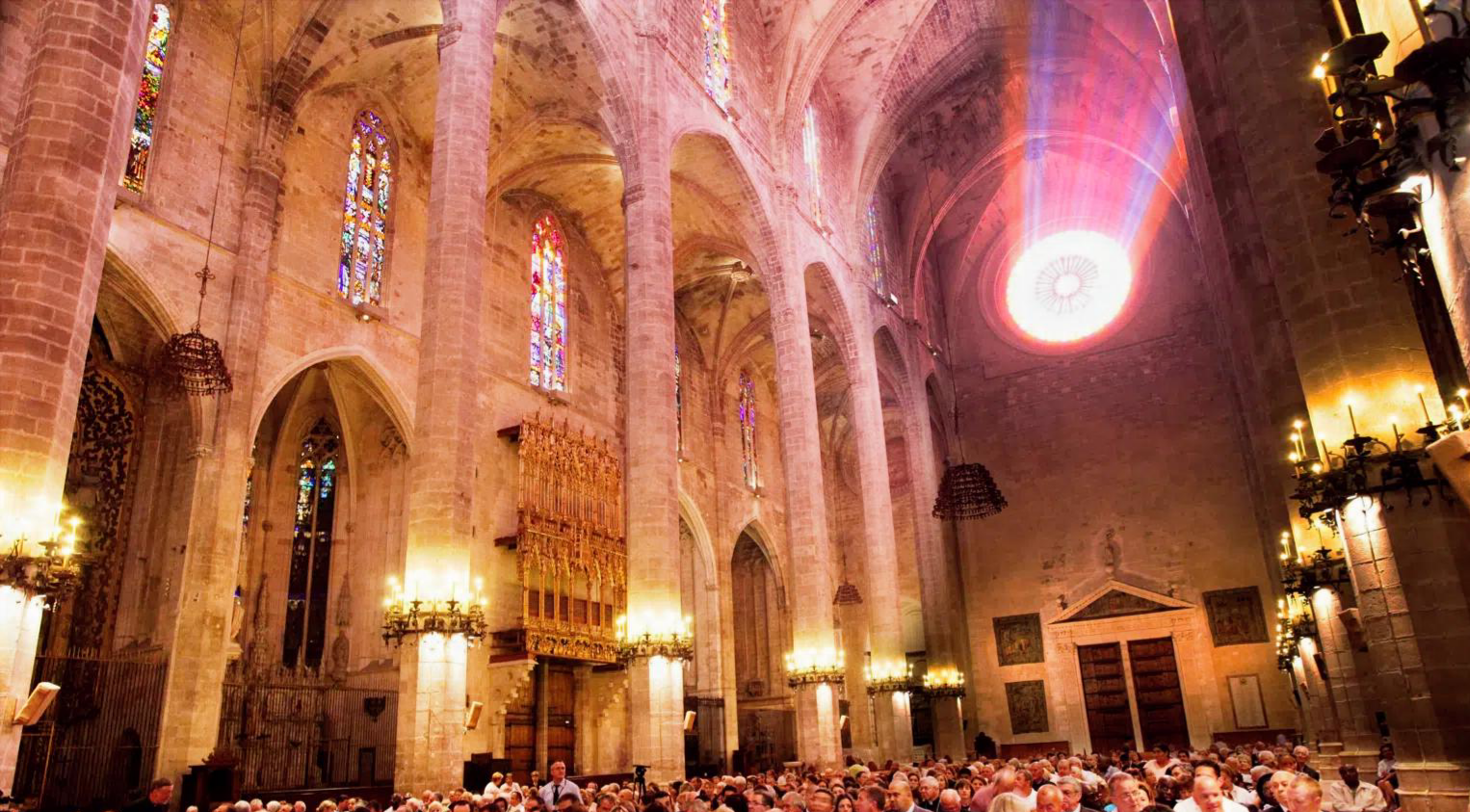
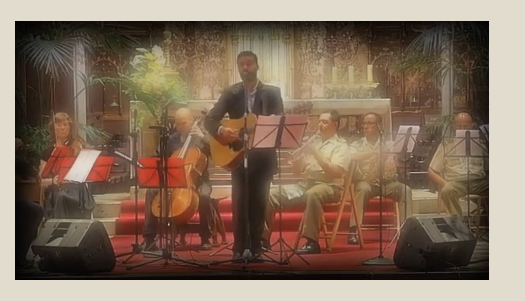
A baroque arrangement by Miquel Àngel Aguiló, performed live at the Cathedral of Palma de Mallorca with the Symphonic Orchestra of the Balearic Islands and the Military Band of the Comandància General de Balears.
All the videos on YouTube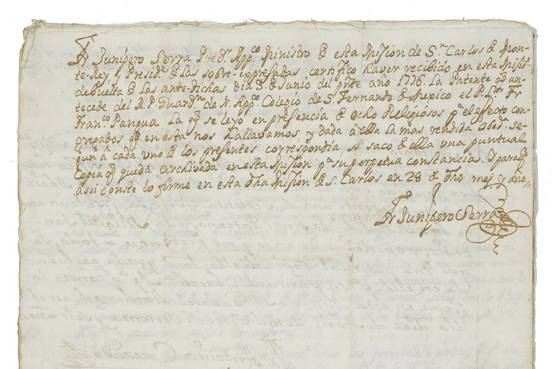
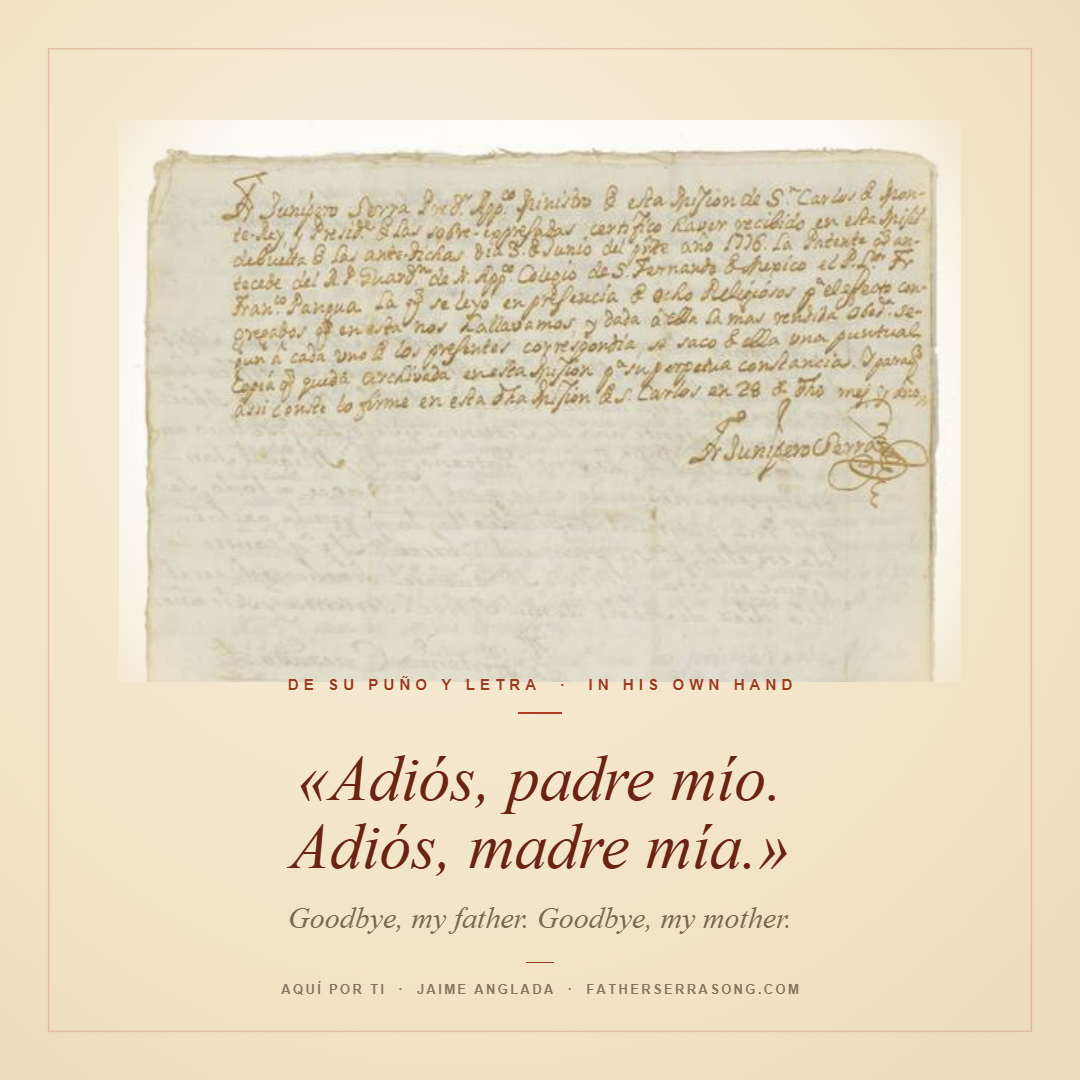
At thirty-five, at the height of a brilliant career, Junípero Serra asked to sail for the New World. He left Mallorca without saying goodbye to his parents — he feared he could not bear it. From Cádiz, on the eve of departure, he wrote to a fellow friar in Petra and asked him to read the letter aloud to them: Antonio and Margarita could not read. They never saw their son again. Two hundred and sixty-four years later, that letter was placed in Jaime Anglada's hands — and it became Aquí Por Ti.
Siempre adelante, nunca atrás.Always forward, never back. The saint's motto was not a slogan — it was what he wrote to console his mother and father.
Written in Spanish, translated for those who would listen across the ocean. Read them together, as the song was always meant to be heard.
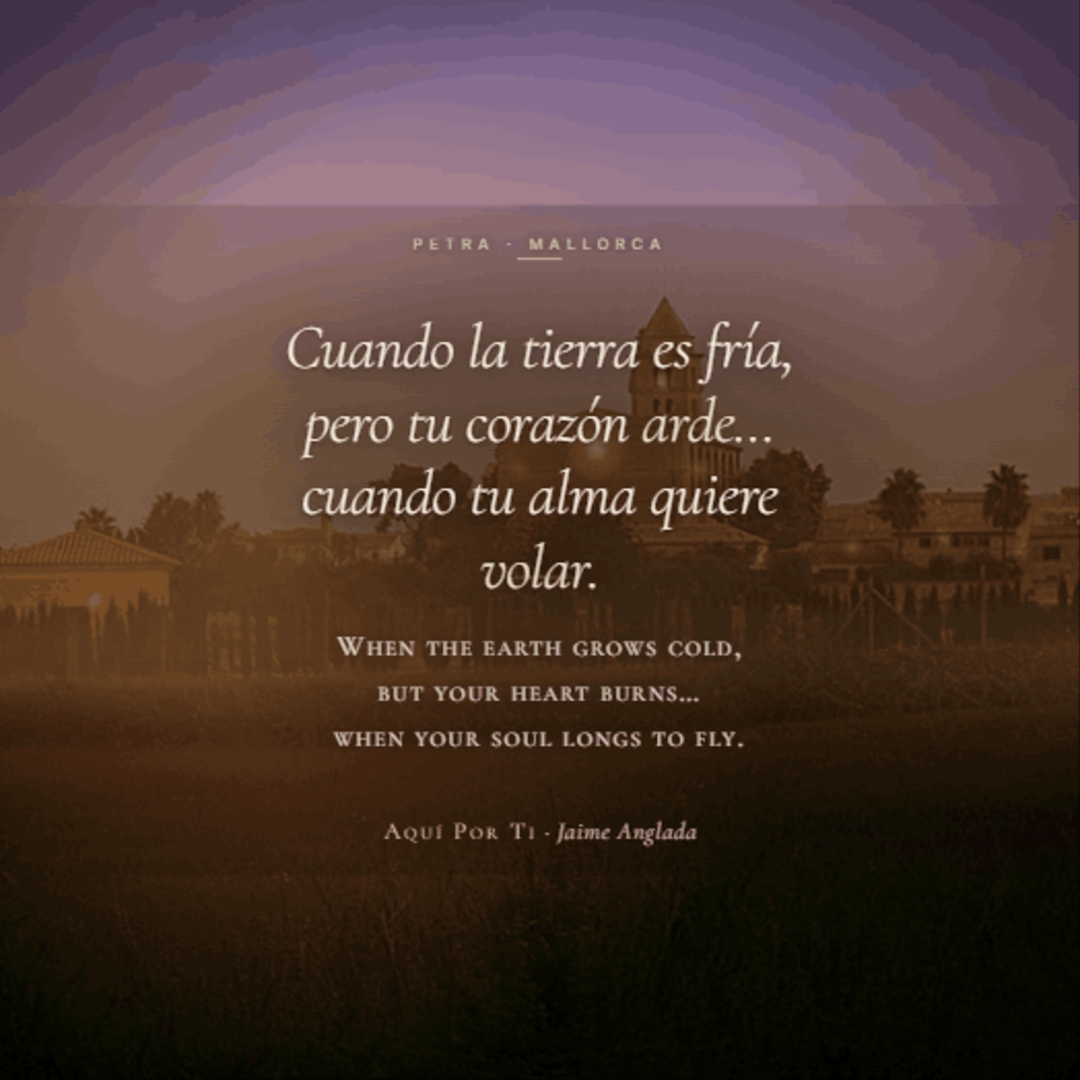
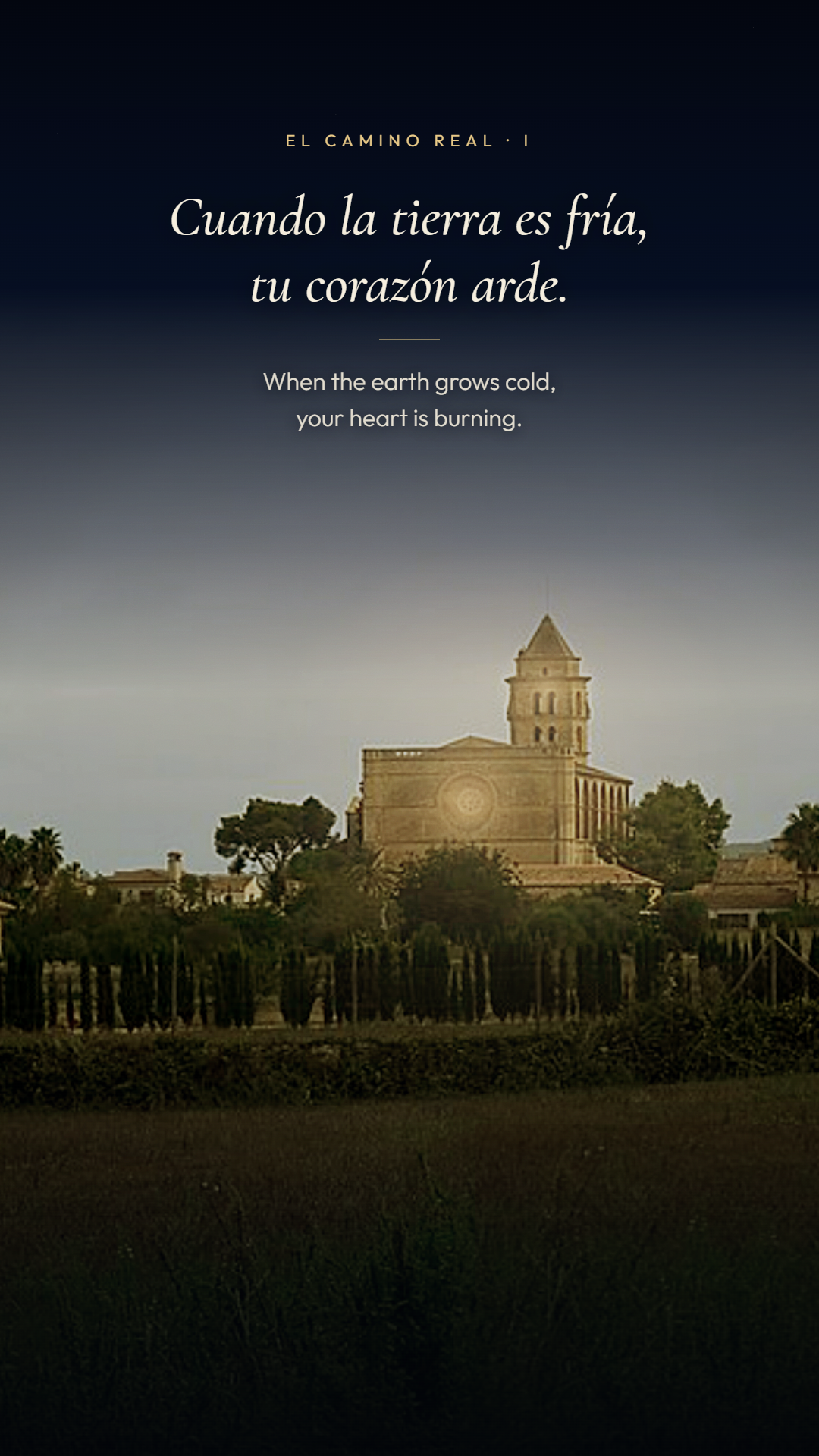
Cuando la tierra es fría Tu corazón arde Cuando tu alma quiere volar.
No existen despedidas El océano no es la huida Es el camino a tu verdad.
El desierto no es fácil Y el horizonte inmenso. ¡Y rezo!
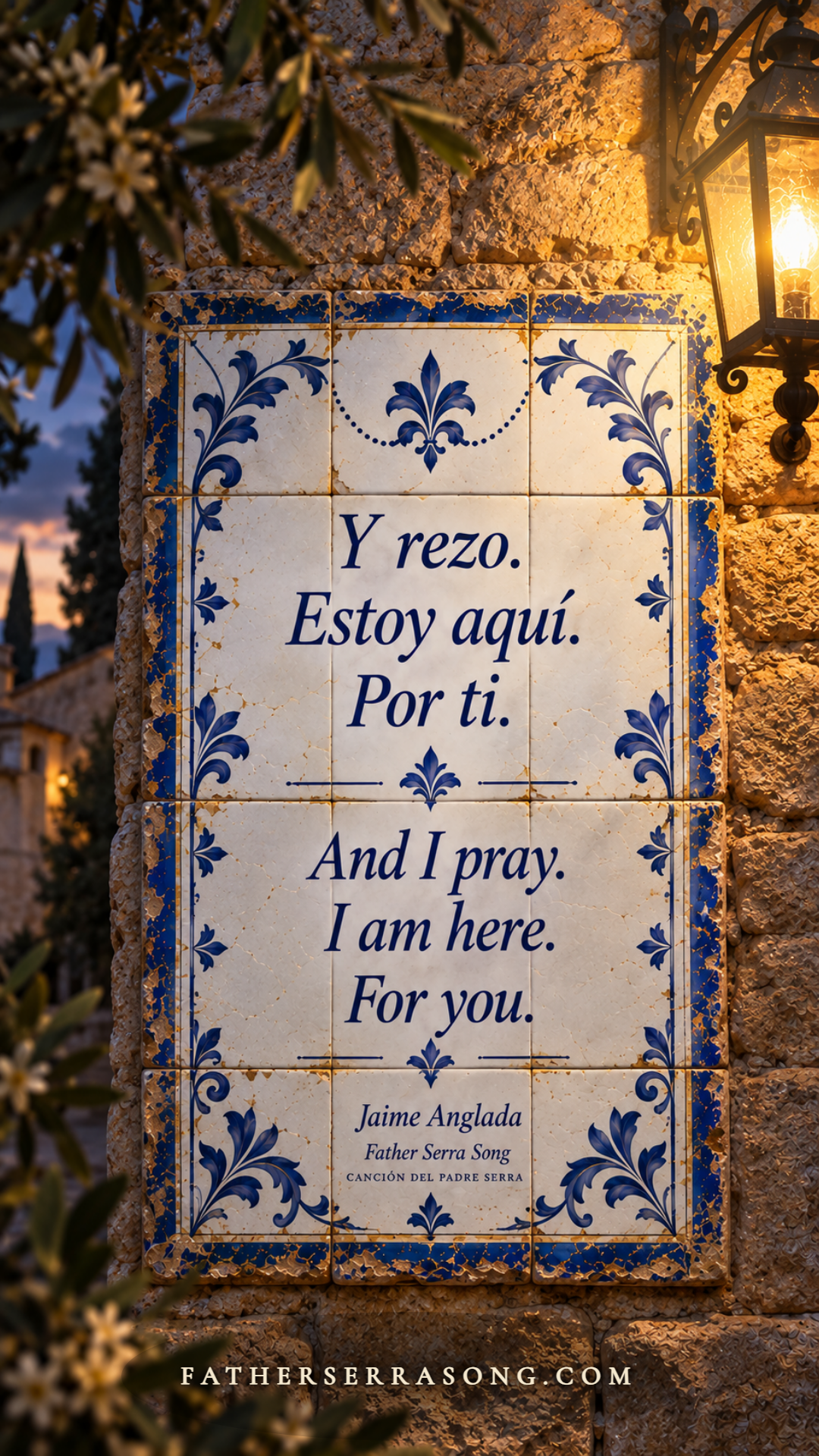
¡Coge mi mano! ¡Coge mi mano! Estoy aquí. Por ti.
No hay vuelta atrás Vine a secar tus lágrimas No hay vuelta atrás.
No hay vuelta atrás Vine a mecer tus miedos Vine a llenar tus manos de bondad.
El desierto no es fácil Y el horizonte inmenso. ¡Y rezo!
¡Coge mi mano! ¡Coge mi mano! Estoy aquí. Por ti.
Cuando el viento quemó mi cara Y atrás el recuerdo de pare i mare Cuando mis pies se clavaron en tu arena Me puse al mercé del Santa Ana.
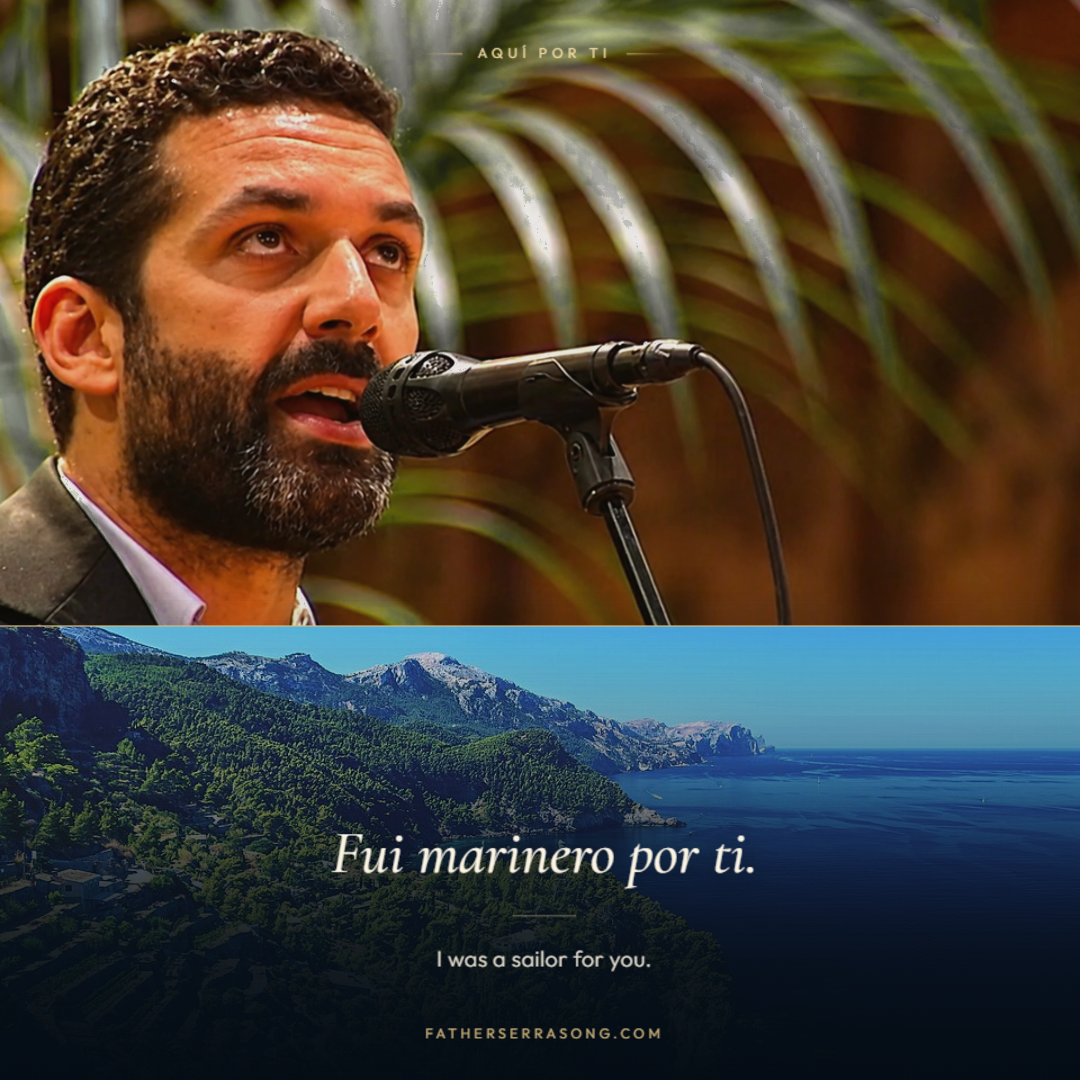
Fui marinero por ti. Atrás queda un Mediterráneo antiguo. Fui misionero por ti. Oh Señor, me diste fuerza y palabra.
El desierto no es fácil Y el horizonte inmenso. ¡Y rezo!
¡Coge mi mano! ¡Coge mi mano! Estoy aquí. Por ti.
Estuve aquí por ti. Fui todo, Señor, por ti.
When the earth grows cold Your heart is burning When your soul wants to fly.
There are no goodbyes The ocean is not an escape It is the road to your truth.
The desert isn't easy And the horizon never ends. And I pray!
Take my hand! Take my hand! I am here. For you.
There is no going back I came to dry your tears. There is no going back.
There is no going back I came to calm your fears I came to fill your hands with goodness.
The desert isn't easy And the horizon never ends. And I pray!
Take my hand! Take my hand! I am here. For you.
When the wind burned across my face My mother and father I would see no more When my feet sank deep into your sands I cast all my hopes on the Santa Ana.
I was a sailor for you. I left behind the ancient Mediterranean. I was a missionary for you. Oh Lord, you gave me strength and voice.
The desert isn't easy And the horizon never ends. And I pray!
Take my hand! Take my hand! I am here. For you.
I was here for you. I was everything, Lord, for you.
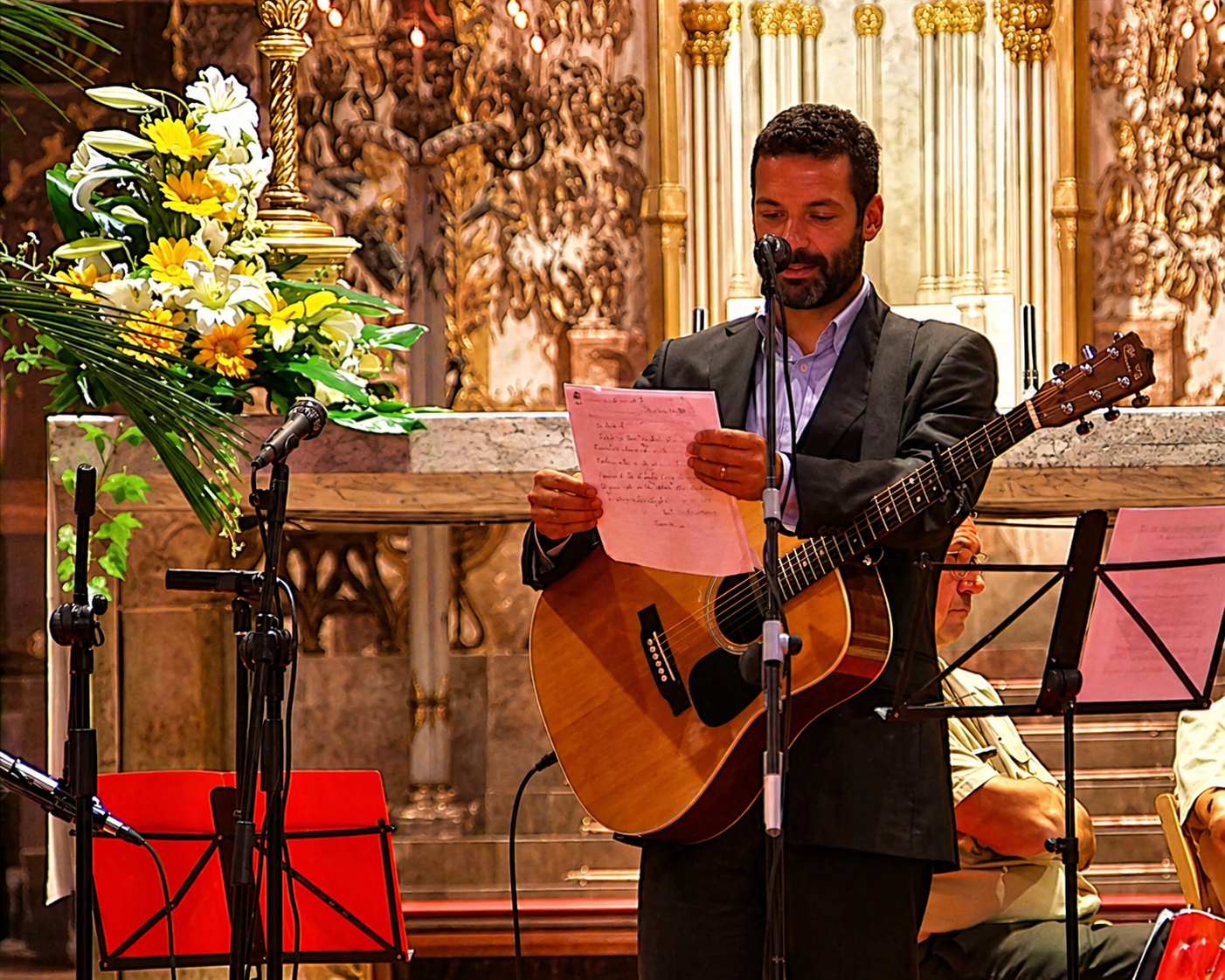
The commission came in 2013, for the tercentenary of Father Serra's birth: would a Mallorcan voice write something for the Mallorcan who had shaped a continent? How could I refuse?
With the commission came a gift: a copy of the last letter Serra wrote before sailing. “It was a farewell letter, profoundly beautiful,” Anglada said. “It moved me. He apologised for leaving, citing his unstoppable need to preach the Gospel.”
He wrote Aquí Por Ti from inside that letter — a son's apology, a son's resolve — and sent the sketch to his friend, the composer Miquel Àngel Aguiló, who gave it its baroque arrangement. “His orchestral writing gave it more strength. It moved me.”
The work was offered freely, as a benefit for Serra International. “It was an entirely charitable activity. There were production costs, of course — but I can boast of having good friends who helped reduce them.”
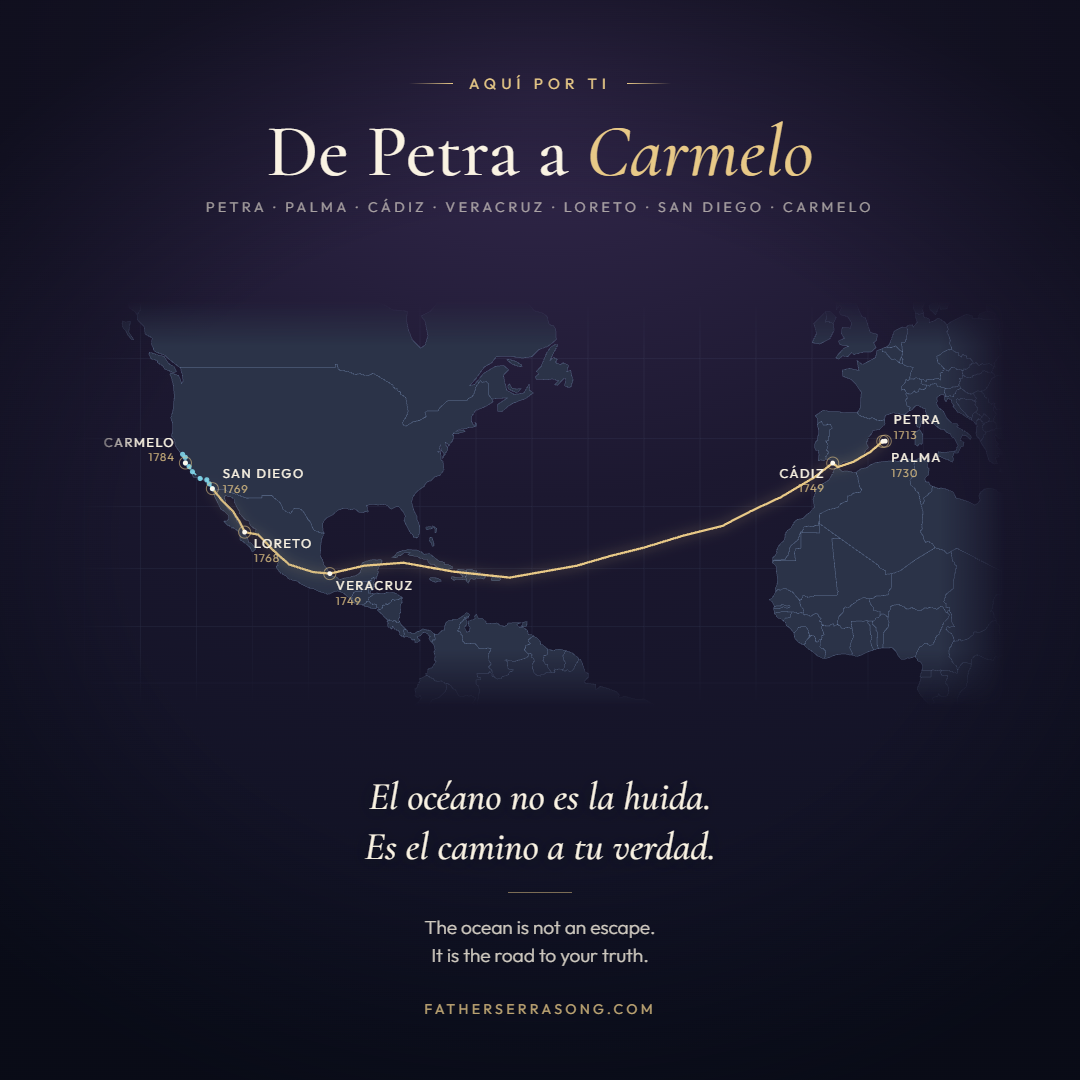
From a village in the red centre of an island to the far edge of the known world. Watch the light walk it — Petra, Palma, Cádiz, the Atlantic, Veracruz, Loreto, San Diego, Carmel.
Born 24 November 1713 to Antonio and Margarita, farmers of vineyards and wheat. So frail he was baptised the same day. He grew into a brilliant, restless child a small village could not keep.
At fifteen he went to the Franciscans in Palma and took the name Junípero, after a companion of St. Francis. By twenty-four he was a doctor of philosophy; when he preached, the cathedral filled. Then, at thirty-five, he left it all.
He waited months for a ship. On the eve of sailing he wrote the letter to his parents — and boarded the Villasota on 28 August 1749, a date that would come back for him on the far side of the world.
Ninety-nine days at sea to Veracruz. From the coast he chose to walk to Mexico City rather than ride; an insect bite on that road left his leg wounded for the rest of his life. Then eight years in the Sierra Gorda, and Baja California.
At fifty-five, on that same leg, he walked north. Fifteen years, nine missions — San Diego to San Francisco — and the road between them that came to be called El Camino Real. El desierto no es fácil, y el horizonte inmenso. ¡Y rezo!
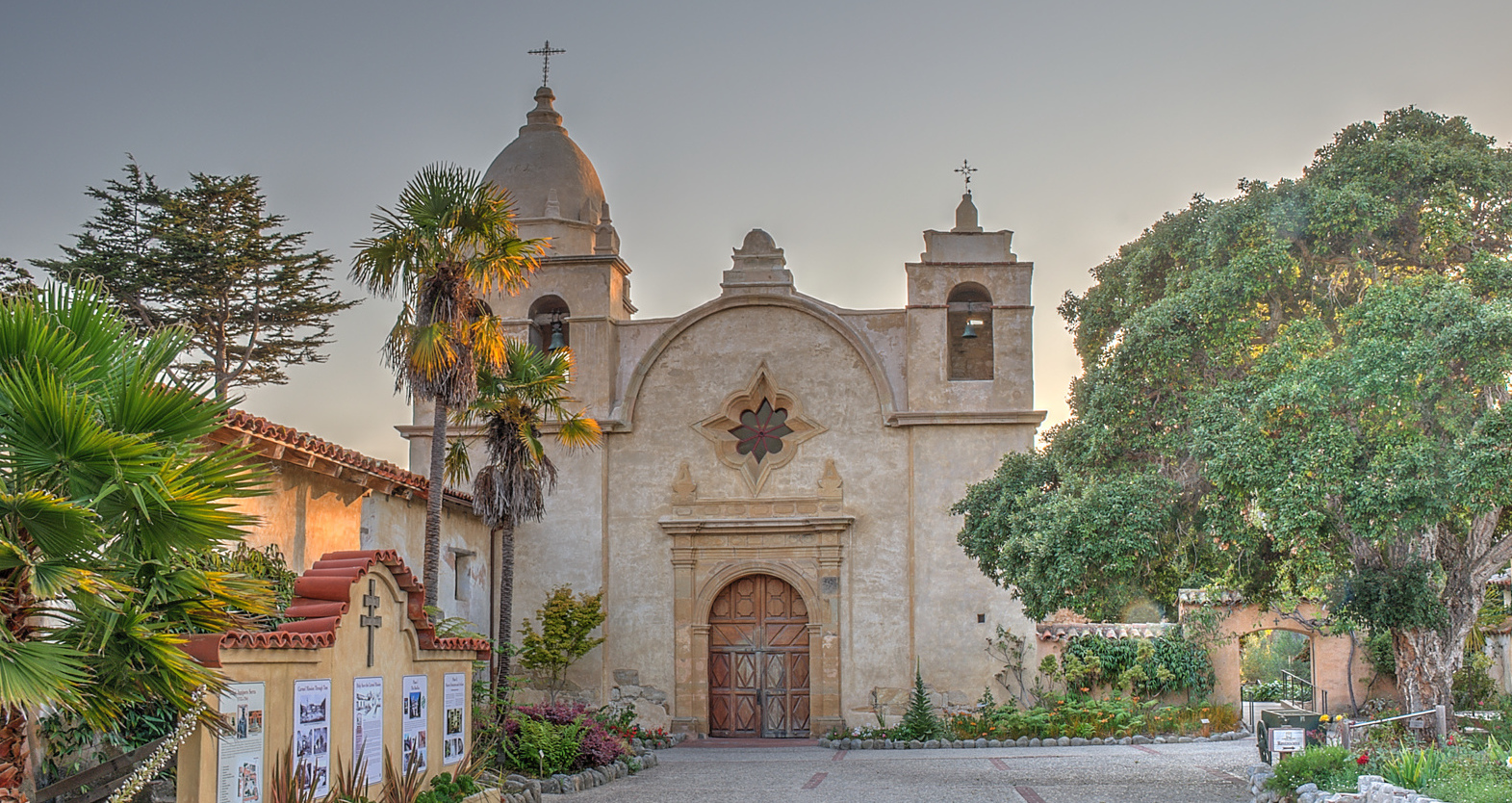
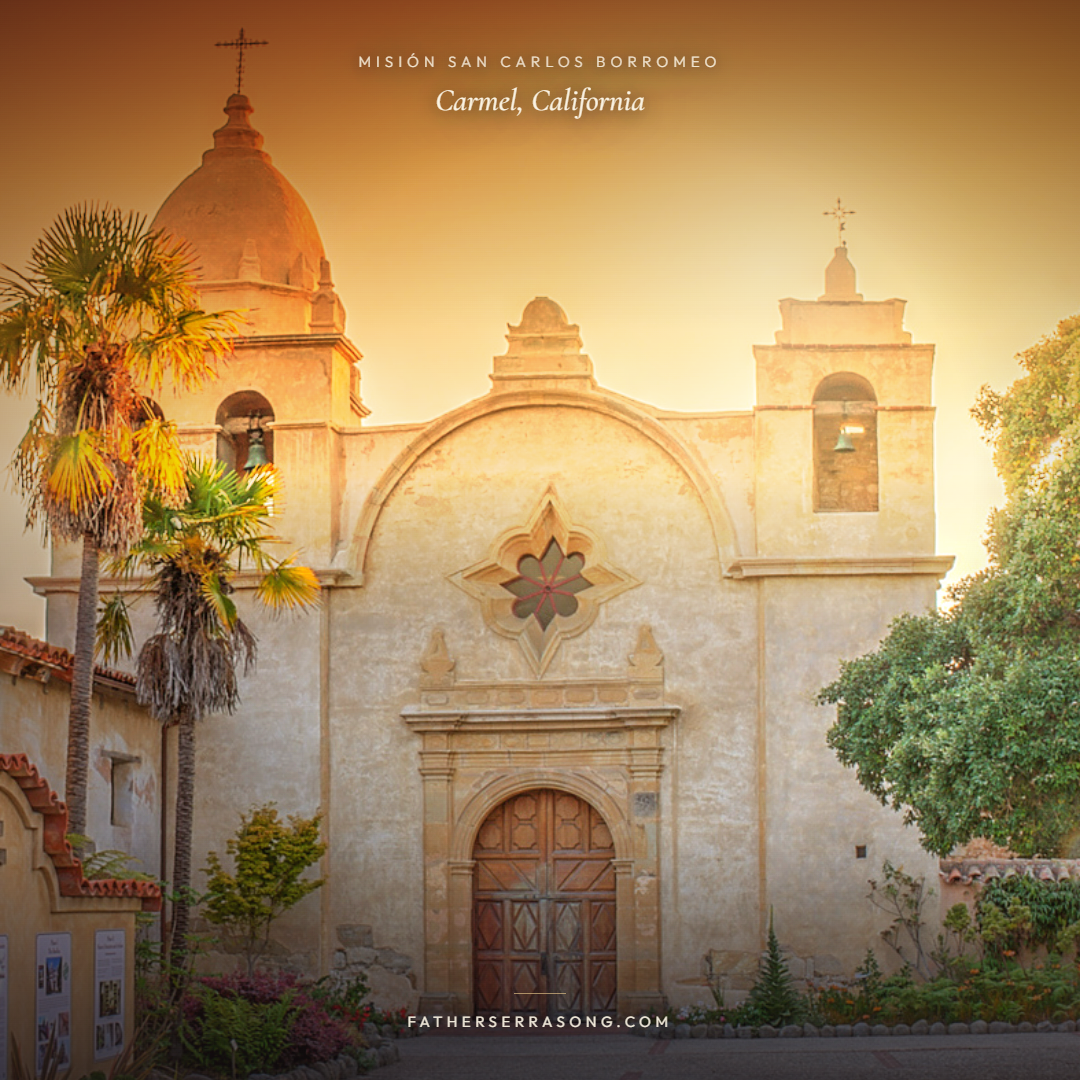
He died at Mission San Carlos Borromeo, aged seventy — thirty-five years to the day since he sailed from Cádiz. Thirty-five years on the island, thirty-five on the other side of the world. He never returned to Mallorca. Canonised by Pope Francis in Washington on 23 September 2015 — the first saint canonised on American soil.
Follow the journey mission by mission — El Camino Real, on Instagram
Every week the song travels a little further — Mallorca, California, Rome, Latin America. A few of the moments the community has shared this year.
Aquí Por Ti was written as a gift to the world, and premiered at a benefit concert sponsored by Serra International. It is shared here with the kind permission of the Diocese of Mallorca — and it belongs in the places that keep his memory.
28 August
Feast of Saint Junípero Serra · the day he sailed, and the day he died24 November
His birthday · Petra, 171323 September
Canonised by Pope Francis · Washington, 2015Two natural moments to share the song with your parish, chapter or school — a reflection before a meeting, a post on the feast day, music before Mass.
Everything on this page may be shared freely: the videos, the recording, the lyrics in both languages, and the letter. Link to this site or to the YouTube channel, and tag @fatherserrasong so we can share it onward.
Would a choir or young musician in your community like to perform it? Write to us and we will put you in touch with the composer.
Serra Clubs, parishes, music directors, press — we would love to hear from you.
fatherserrasong@gmail.comMessage us on Facebook